Ramotswa Transboundary Aquifer Groundwater Remediation and Sanitation Project Protecting Groundwater. Improving Lives.
The Ramotswa Transboundary Aquifer Groundwater Remediation and Sanitation Project is a pioneering regional initiative aimed at improving water security and public health for low-income communities in Ramotswa, Botswana.
The project combines innovative groundwater remediation with improved sanitation solutions to reduce contamination, protect critical water resources and improve access to safe drinking water.
Located along the Botswana–South Africa border within the Upper Limpopo Basin, the Ramotswa Transboundary Aquifer is a vital shared water resource. The aquifer supplies water to communities in Ramotswa through a network of boreholes serving the area southwest of Gaborone.
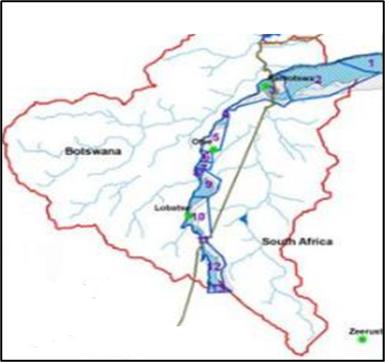
Figure 1: Catchment area and flow path of the Ramotswa Aquifer
Addressing a Growing Water Challenge
The aquifer faces increasing contamination risks linked to pit latrines, sanitation practices and surface water infiltration, placing growing pressure on groundwater quality and long-term water security.
The project introduces sustainable remediation measures, including:
- In-situ groundwater treatment solutions
- Improved sanitation interventions
- Upgrading and rehabilitation of boreholes
- Measures to protect water infrastructure during heavy rainfall events
Feasibility studies and technical assessments will guide the implementation of effective long-term remediation solutions.
Regional Collaboration in Action
The initiative is supported by the Governments of Botswana and South Africa through:
- Department of Water and Sanitation
- Water Utilities Corporation
The project demonstrates strong cross-border cooperation in addressing shared water and sanitation challenges within the SADC region.
Impact for Communities
Once implemented, the project is expected to:
- Improve groundwater quality
- Reduce potable water treatment costs
- Increase access to safe drinking water for approximately 27,000 people
- Strengthen climate resilience and sustainable water management
The project also has the potential to serve as a replicable model for other SADC communities facing groundwater contamination and water scarcity challenges.
Funding and Implementation
The project is supported through a EUR 1.8 million grant from the Southern African Development Community funded by KfW Development Bank.
Funding supports:
- Feasibility studies
- Detailed engineering designs
- Tender preparation for implementation
The project is being prepared and implemented by the SADC Water Fund, housed within the Infrastructure Delivery Division of the Development Bank of Southern Africa.Top of FormBottom of Form